What Is It?
The Fastest Growing Oak in the East
The northern red oak combines something rare in the oak world: fast growing vigor with the strength, beauty, and ecological importance that define the beech family.
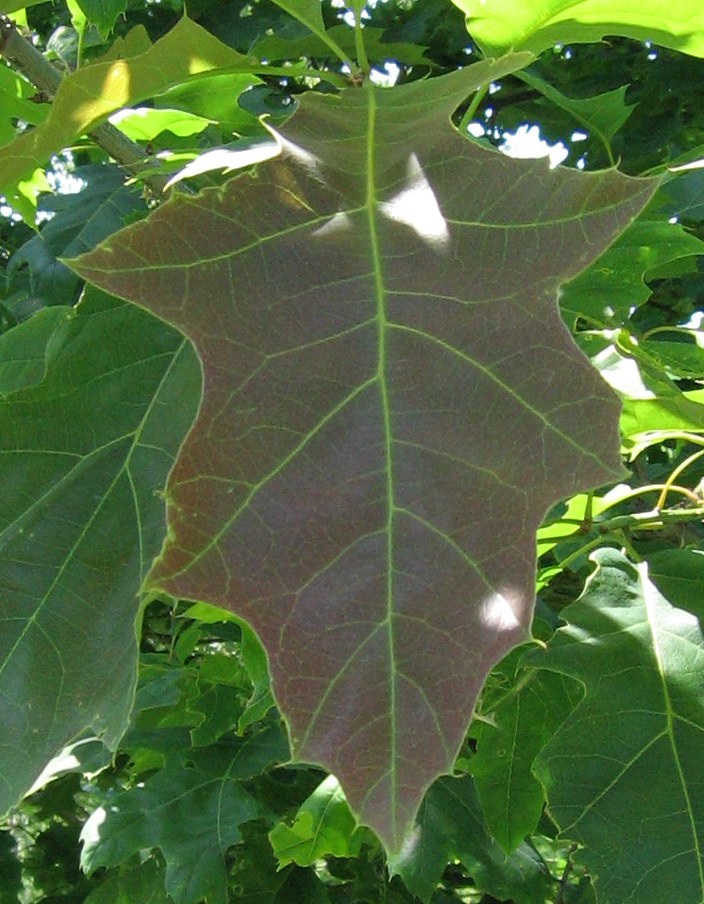
The northern red oak (Quercus rubra L., sometimes listed under the older synonym Quercus borealis) is one of the most widely planted and commercially important deciduous oaks across Eastern North America. Its common name comes from the brilliant red to russet tones its foliage turns every autumn – a display that has made this large tree a fixture in parks, campuses, and neighborhoods from Nova Scotia and Prince Edward Island south through North Carolina and west to Minnesota.
As a member of the red oak group within the beech family (Fagaceae), the northern red oak shares key traits with relatives like scarlet oak, black oak, and Shumard oak: bristle-tipped leaf lobes, acorns that take two growing seasons to mature, and dark-furrowed bark. But among all these deciduous trees, the northern red oak stands out for its unusually rapid growth rate – one of the fast growing trees in the oak world – and its exceptional tolerance of urban conditions, including air pollution.
The species is the state tree of New Jersey, a recognition that reflects its deep roots in the cultural and ecological landscape of the eastern states. It is listed in the USDA PLANTS database and extensively documented in the Flora of North America.
"Northern red oak grows faster than any other oak I've planted in Nashville. Give it room and decent soil, and it will reward you with shade and color for generations."
Smith Works Tree Service – Nashville, TNIdentification
How to Recognize One
Northern red oak has distinctive features in every season. Once you can identify the pointed-lobe leaves and dark, striped bark, you will start noticing northern red oak trees everywhere in the Nashville landscape.
Oak Leaf Description
The oak leaf is the most reliable identification feature. Each leaf has 7 to 11 pointed lobes tipped with tiny bristles – a defining trait of the red oak group. The sinuses (indentations between lobes) extend about halfway to the midrib, shallower than those of scarlet oak (Quercus coccinea). The upper surface is smooth, dark green, and somewhat glossy during the growing seasons. The underside is paler with small tufts of hair in the vein axils.
New leaves emerge in spring with a pinkish-bronze tint before darkening to full green by early summer. In autumn, the foliage transforms into the red fall color that gives this tree species its name – ranging from russet-orange to deep brilliant red, depending on sun exposure, soil pH, and the individual tree's genetics.
Leaf, Bark & Fruit at a Glance
-
Oak Leaf5 to 9 inches long; 7 to 11 pointed lobes with bristle tips; dark green upper surface; alternate leaf arrangement
-
Flower ColorMale flowers are yellow-green drooping catkins (3 to 5 inches); female flowers are tiny reddish spikes at leaf axils
-
AcornsRound, 3/4 to 1 inch long with a flat, saucer-shaped cap covering about 1/4 of the nut; matures over two growing seasons
-
BarkDark gray to nearly black with broad, flat-topped ridges and shallow furrows; develops distinctive "ski trail" vertical stripes
-
Plant TypeDeciduous tree; woody plant in the beech family (Fagaceae); genus name Quercus
Bark & Form
Mature bark is dark gray to nearly black, developing broad, flat-topped ridges separated by shallow furrows. A useful identification trick: look for pale, smooth strips running vertically down the trunk between the dark ridges, sometimes described as ski trail patterns. This bark texture is quite different from the light, flaky bark of white oaks. In Nashville's mixed hardwood forests, you will often find northern red oak growing alongside sugar maple, white oak, and hickory on north-facing slopes.
Bloom Time & Flowers
Northern red oak blooms in April and May – its bloom time coinciding with the emergence of new leaves. The male flowers appear as slender, drooping catkins with yellow-green color, releasing clouds of wind-borne pollen. The female flowers are tiny, reddish, and clustered at the base of new growth on the current year's shoots. The flower color is subtle and easy to miss, unlike the showy blooms of magnolias or redbuds.
Fruit & Seeds
Acorns of the Red Oak Group
Unlike white oaks, whose acorns mature in a single season, northern red oak acorns require two full growing seasons to develop – a defining trait of the entire red oak group. This longer life cycle means you will find both tiny first-year acornlets and full-sized ripe acorns on the same tree each fall.
Two-Year Maturation
Acorns of red oak are pollinated in spring, overwinter as small green buds, then swell and ripen the following September and October. This two-year life cycle distinguishes all members of the red oak group from the white oak group.
Size & Shape
Ripe northern red oak acorns are round to oval, about 3/4 to 1 inch long, with a flat, saucer-like cap that covers roughly one-quarter of the nut. The cap is a useful ID feature – much shallower than the deeply cupped caps of bur oak.
Seed Crop & Mast Years
Heavy acorn production occurs every 2 to 5 years during mast years, when trees produce an outsized seed crop. Between mast years, acorn production may be light but still provides a reliable food source for wildlife.
Red oak group acorns are higher in tannins than white oak acorns, making them more bitter. Despite this, they remain a critical food source for wild turkeys, blue jays, deer, and many small mammals. The higher tannin content is actually an advantage – squirrels are more likely to cache (bury) red oak acorns for later rather than eating them immediately, which improves the tree's chances of producing oak seedlings.
Siting & Growth
Planting Fast Growing Trees Right
Northern red oak is one of the easiest oaks to establish in a landscape. Its fast growing nature during the early growing seasons means you will see results quickly – but choosing the right site is still critical for long-term success.
Site Requirements
-
SunlightRequires full sun – at least 6 hours of direct sunlight daily. Tolerates light afternoon shade when young but develops a thinner canopy without adequate light.
-
Soil ConditionsPrefers well-drained soils with slightly acidic soil pH (5.5 to 6.5). Adapts well to clay soil and even dry soil once established. Tolerates moderately alkaline soils better than many oaks.
-
Space NeededPlan for a canopy spread of 40 to 50 feet. Allow at least 35 feet from structures. This large tree needs room.
-
Hardiness ZoneUSDA Zones 3 to 8. Nashville's Zone 7a sits comfortably within the optimal range.
-
Growth RateAmong the fast growing trees in the oak genus. Young trees add 18 to 24 inches per year. Some Nashville trees on good sites can exceed 2 feet annually.
Planting Steps
- Choose a site in full sun with well-drained soils. Northern red oak adapts to a wider range of conditions than many oaks, but soggy sites will cause root rot.
- Dig a hole 2 to 3 times wider than the root ball but no deeper. The root flare must sit at or slightly above grade level.
- For bare-root stock, spread the roots outward in the hole. For balled-and-burlapped or container-grown trees, remove all wrapping and loosen circling roots.
- Backfill with native soil. Avoid heavy amendments – the tree's root system needs to adapt to the soil it will grow in permanently.
- Water deeply at planting. Apply 3 to 4 inches of hardwood mulch in a ring, keeping mulch 4 to 6 inches away from the trunk.
Northern red oak is one of the most widely planted street trees in the eastern United States. It tolerates air pollution, compacted soils, and reflected heat better than most oaks. Its upright form fits well in wide medians and parkways. Nashville's Metro Forestry division includes northern red oak on its recommended planting list for public right-of-way sites.
Black walnut trees produce juglone, a chemical toxic to many plants. While mature red oaks can tolerate some juglone exposure, young trees planted within the drip line of a black walnut may suffer stunted growth and leaf scorch. Plant at least 50 feet from any established black walnut.
Tree Care
Keeping Your Red Oak Healthy
Northern red oak is a tough, adaptable tree – but it faces some serious threats that Nashville homeowners should know about, particularly oak wilt and red oak borer.
Pruning Basics
Prune only in late fall or winter when dormant. This timing is critical for red oaks because fresh pruning wounds during the growing seasons attract sap beetles that spread oak wilt spores. Remove dead, crossing, and structurally weak branches. Hire a certified arborist for mature trees.
Watering & Soil Moisture
Maintain consistent soil moisture for the first 2 to 3 growing seasons. Water deeply (15 to 20 gallons) once a week during dry spells. Established trees are drought-tolerant and handle dry soil well. A 3-inch mulch ring helps conserve soil moisture.
Oak Wilt
Oak wilt is the single greatest threat to northern red oak trees. This devastating fungal disease can kill a tree within weeks. It spreads through interconnected root systems and via sap-feeding beetles. Red oaks are far more vulnerable than white oaks. Never prune from April through July.
Pests to Watch
The red oak borer tunnels into stressed trees, causing branch dieback and structural weakness. Gypsy moth caterpillars can defoliate entire canopies during outbreaks. Keep trees healthy with adequate water and mulch – stressed trees attract borers. Competition from invasive species like Japanese stiltgrass in the understory can also stress young oaks. Report large gypsy moth populations to the Tennessee Department of Agriculture.
If your red oak suddenly wilts from the top down with leaves turning brown and curling during the growing season, contact a certified arborist immediately. Oak wilt can kill a northern red oak in 4 to 6 weeks. Early detection and root barrier trenching between infected and healthy oaks may save neighboring trees. Never move firewood from an oak wilt-infected tree – this is one of the primary ways the disease spreads to new oak forests.
Year-Round Guide
Seasonal Calendar for Nashville
Here is what to expect from your northern red oak through the seasons in Middle Tennessee.
Ecology
A Native Tree That Feeds the Forest
The northern red oak's wildlife value is immense. As a native tree and keystone woody plant, it supports hundreds of species across its native range – from insects and songbirds to large game animals.
Wild Turkeys
Wild turkeys are among the most important consumers of northern red oak acorns. Flocks forage through oak forests and Nashville woodlands every fall, relying on the seed crop to build fat reserves.
Blue Jays
Blue jays are prolific seed dispersers, caching thousands of northern red oak acorns every fall. Many forgotten caches sprout into oak seedlings, making jays one of the most effective planters of oaks.
Black Bears
Black bears in the southern Appalachian forests depend heavily on red oak acorn crops to build pre-hibernation fat. Mast failure years can cause bears to roam more widely in search of food sources.
Gray Hairstreak
The Gray Hairstreak butterfly (Strymon melinus) uses oaks as a larval host. Over 500 caterpillar species feed on oak leaves – a staggering wildlife value that makes oaks the most ecologically important genus of native plants.
Small Mammals
Squirrels, chipmunks, and other small mammals rely on the acorn production of red oaks as a primary fall and winter food source. Their caching behavior drives oak forest regeneration.
Native Plants & Canopy
A single mature northern red oak shades over 4,000 square feet, creating a microclimate where shade-tolerant native plants like ferns, trilliums, and woodland wildflowers flourish on valley floors and slopes.
Related Oaks
The Red Oak Group in Nashville
Northern red oak belongs to the red oak group (section Lobatae), which includes many other deciduous oaks found across Middle Tennessee. All share bristle-tipped leaf lobes and two-year acorn production. Here are some relatives you may encounter alongside northern red oak.
Scarlet Oak
Scarlet oak (Quercus coccinea) has deeply cut leaf sinuses reaching nearly to the midrib. Its autumn color is a vivid scarlet – often even more intense than northern red oak. Prefers drier, sandier soils.
Black Oak
Black oak (Quercus velutina) has glossy, leathery leaves and inner bark that is bright yellow-orange. Common on Nashville's drier ridgetops. Its acorns are larger and more deeply cupped than northern red oak's.
Shumard Oak
Shumard oak is the southern counterpart to northern red oak, tolerating wetter sites and more alkaline conditions. Often recommended over northern red oak for Nashville's limestone-influenced soils.
Southern Red Oak
Southern red oak (Spanish oak) has narrower, more deeply lobed leaves with a distinctive three-pointed terminal lobe. Very common on Nashville's drier upland sites.
Pin Oak
Pin oak (Quercus palustris, sometimes confused with Quercus ellipsoidalis) has deeply cut leaves and a distinctive pyramidal form with drooping lower branches. Popular street tree but struggles in Nashville's alkaline soils.
Chestnut Oak
Chestnut oak belongs to the white oak group (rounded lobes, no bristle tips) but is common alongside red oaks on Nashville ridgetops. Its thick, deeply furrowed bark is distinctive.
For large, well-drained properties in full sun, northern red oak is a superb choice. If your site has heavier, more alkaline clay soil, consider Shumard oak or bur oak instead – both handle Nashville's limestone-influenced soils with less stress. For the driest ridgetop sites with dry soil, post oak or chestnut oak are the most adapted native plants. A site assessment from a local arborist can help match the right tree species to your soil conditions.
Local Focus
Northern Red Oak in Nashville
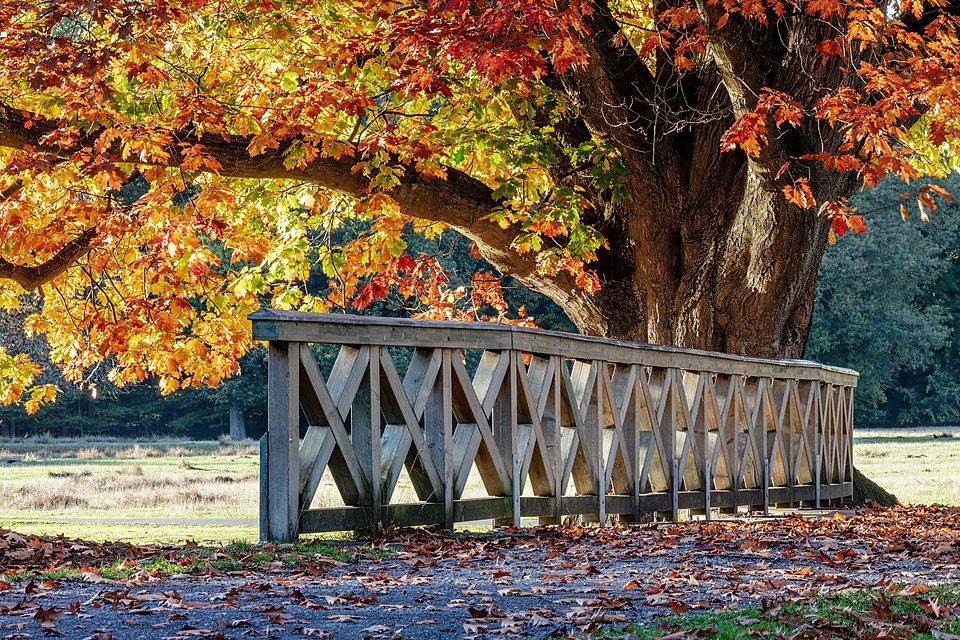
Red Oak in Nashville
Northern red oak thrives throughout Middle Tennessee's rolling landscape, especially on the well-drained slopes and ridgetops that characterize the Nashville Basin's rim. It is a common presence in the city's older neighborhoods and public parks.
-
Zone 7a ClimateNashville's warm summers and mild winters are well within the northern red oak's hardiness zone range. The tree handles our occasional ice storms and summer heat without difficulty.
-
Soil & DrainagePerforms best on Nashville's acidic, well-drained soils. On heavier clay soil or sites with alkaline pH, Shumard oak may be a better alternative.
-
Autumn ColorNashville's warm days and cool October nights bring out the deepest red fall color. The display typically peaks in late October to early November.
-
Urban PlantingWidely used as a street tree along Nashville boulevards. Tolerates air pollution and urban heat better than most oaks in our region.
History & Timber
Centuries of Use
Red oak wood is one of the most commercially important hardwoods in North American forestry. Its combination of strength, workability, and abundant supply has kept it at the center of the American timber industry for centuries.
Native Use
Acorns as Staple Food
Indigenous peoples across Eastern North America processed red oak acorns by leaching them in running water to remove bitter tannins, then grinding them into flour. The bark was used medicinally as an astringent. Red oak's role in native plants ecosystems made it a cornerstone of forest management by Native Americans.
Colonial Era – 19th Century
Railroad Ties & Construction
Northern red oak's hard, durable wood became essential for railroad ties during the great American rail expansion. Unlike white oak, red oak is not watertight (its pores are open), so it was not used for barrels – but its strength made it ideal for structural timber, mine props, and heavy construction.
Modern Uses
Flooring, Furniture & Veneer
Today, red oak remains one of the most important commercial hardwoods in North American forestry. It is the standard for hardwood flooring, cabinetry, and furniture. Red oak veneer is used extensively in architectural millwork. The USDA Forest Products Laboratory rates it among the strongest domestic hardwoods.
Botany & Classification
Plant Names & Synonyms
The species was first described by Linnaeus as Quercus rubra in 1753. Some older references list it as Quercus borealis Michx., a name still encountered in certain plant collections and historical Flora of North America texts. Modern classification places it firmly in the red oak group (section Lobatae) within the beech family. The USDA PLANTS database lists the accepted plant names and distribution data for all North American oaks.
Video: Northern Red Oak Care Tips
Expert guidance on growing and maintaining red oaks in the Nashville landscape.
Video: Northern Red Oak Care Tips
Common Questions
Northern Red Oak FAQ
Northern red oak is one of the fast growing trees in the oak genus. Young trees typically add 18 to 24 inches of height per year during their early growing seasons. Trees on ideal sites with full sun and well-drained soils can exceed 2 feet annually. This rapid growth rate makes it one of the best oaks for establishing shade quickly.
Yes. Northern red oak is widely regarded as one of the best street trees in Eastern North America. It tolerates air pollution, compacted soils, reflected heat, and urban stresses better than most deciduous oaks. Its upright form, dense canopy, and brilliant red fall color make it a favorite for municipal plantings from New Jersey and New York to Nashville.
Both are members of the red oak group with bristle-tipped leaf lobes. Scarlet oak (Quercus coccinea) has deeper sinuses cutting almost to the midrib, while northern red oak's sinuses reach about halfway. Scarlet oak's upper surface is glossier, and it prefers drier, sandier sites. Northern red oak is more urban-tolerant and faster growing.
Northern red oak trees typically reach a mature height of 60 to 75 feet with a crown spread of 40 to 50 feet. Exceptional specimens in open settings can exceed 80 feet. The trunk can reach 3 to 4 feet in diameter at maturity.
Highly. Oak wilt is the single greatest disease threat to northern red oak trees. Infected red oaks can die within 4 to 6 weeks. The fungus spreads through root system grafts between nearby oaks and via sap beetles attracted to wounds. Never prune during the growing seasons (April through July) and paint any unavoidable wounds immediately.
Northern red oak acorns are a critical food source for wild turkeys, blue jays, black bears, white-tailed deer, and many small mammals. Despite their higher tannin content, wildlife consumes them heavily, especially during mast years with strong acorn production.
Need Help With Your Nashville Oaks?
Whether you need oak pruning, health assessment, oak wilt diagnosis, storm damage cleanup, or advice about planting the right tree for your property, Smith Works Tree Service is here to help.
Get a Free EstimateServing Nashville, Davidson County & Middle Tennessee