What Is It?
Nashville's Star-Leaved Giant
Few trees deliver the same combination of fast growth, stunning fall color, and wildlife value as the Sweetgum. Known by the Common Name Sweetgum – and sometimes called alligatorwood, satin walnut, redgum, or the Gumball Tree – this large tree is a familiar sight across Nashville landscapes.
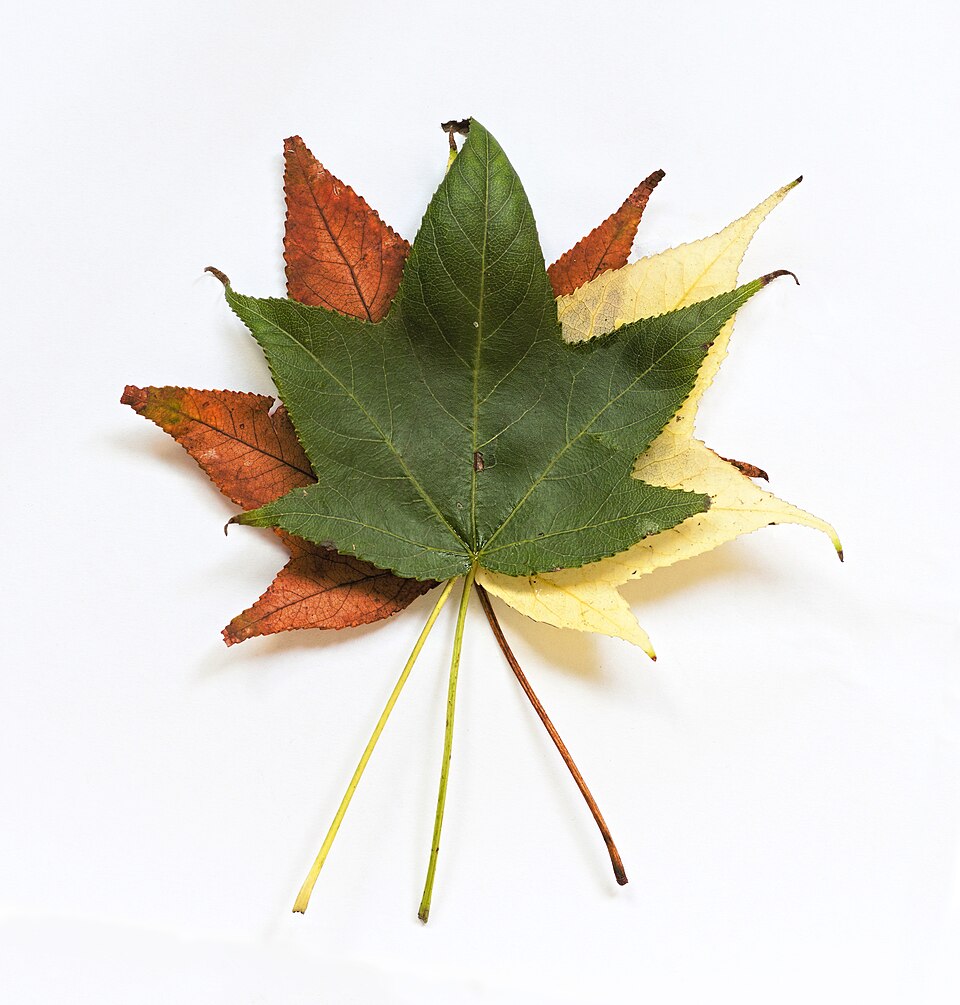
The Sweetgum (Liquidambar styraciflua L.), with the Scientific Name Liquidambar styraciflua L., is a large deciduous tree native to the southeastern United States and eastern United States, ranging from Connecticut and North Carolina south to South Carolina, Florida, and west to eastern Texas. Its range extends into Central America as far south as Honduras and Guatemala. The USDA Plants database lists it in the Witch-hazel family (Altingiaceae).
Sweetgum is instantly recognizable by its star-shaped leaves with 5 to 7 pointed lobes, glossy green leaves that turn brilliant fall color in autumn, and the infamous spiky gum balls (also called seed balls or seed pods) that litter the ground each winter. The tree develops a conical crown when young that broadens with age, supported by a straight trunk covered in distinctive grayish-brown, deeply furrowed bark that earned it the name alligatorwood.
As a Native Trees species, Sweetgum plays an important ecological role across Nashville. Its fast Growth rate makes it popular for quick shade, and its Mature Height of 60 to 80 feet creates a commanding canopy presence in both natural forests and residential landscapes.
"Love it or hate it, the Sweetgum is one of Nashville's most spectacular fall color trees. If you can live with the gum balls, you will be rewarded with a show-stopping canopy every October."
Smith Works Tree Service – Nashville, TNIdentification
How to Recognize One
Sweetgum is one of the easiest trees to identify in Nashville, thanks to its unique star-shaped leaves and unmistakable gum balls. Here are the key features to look for when identifying this Native Trees species.
Star-Shaped Leaves
The Leaf Shape is the Sweetgum's most distinctive feature. Each leaf has 5 to 7 pointed lobes arranged in a star pattern, typically 4 to 7 inches across. The glossy green leaves have finely serrated edges and emit a pleasant fragrance when crushed. The leaves are arranged alternately on the stems, unlike the opposite leaf arrangement of maples, which Sweetgum leaves are sometimes confused with.
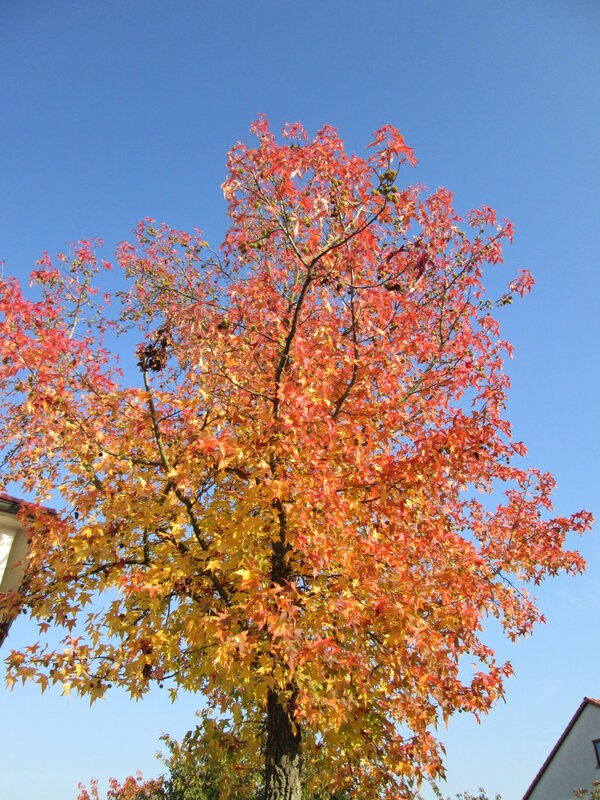
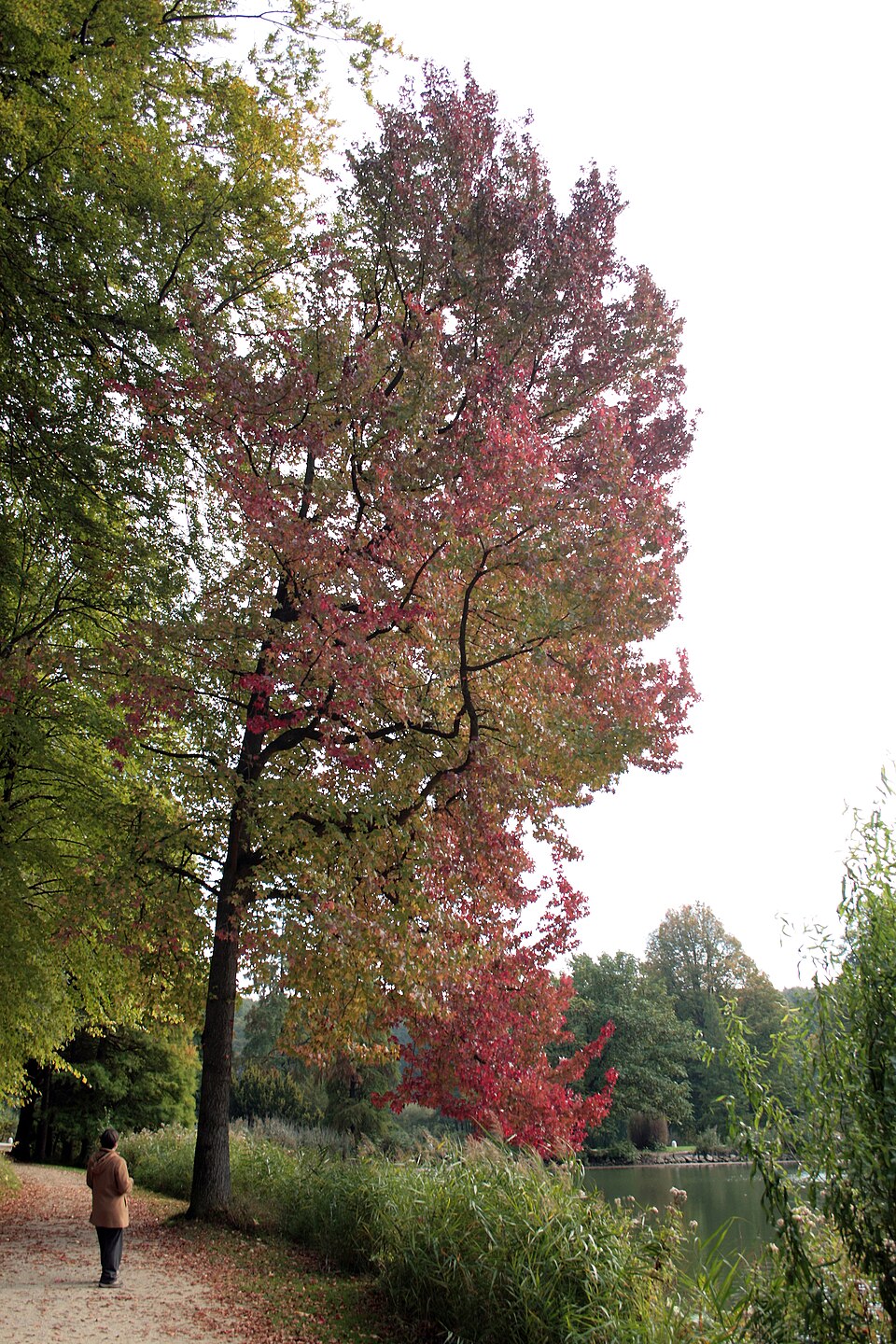
In autumn, Sweetgum produces one of the most varied fall color displays of any tree species. Individual trees can show bright red, orange, purple, yellow, and even green – often all on the same tree at once. Trees in full sun produce the most intense red fall color, including deep burgundy and brilliant fall color shades. The northern part of its range generally produces more reliable reds, but Nashville trees still put on an impressive show.
Leaf, Bark & Fruit at a Glance
-
Star-Shaped Leaves5 to 7 pointed lobes; 4 to 7 inches across; glossy green leaves above; finely serrated margins; aromatic when crushed
-
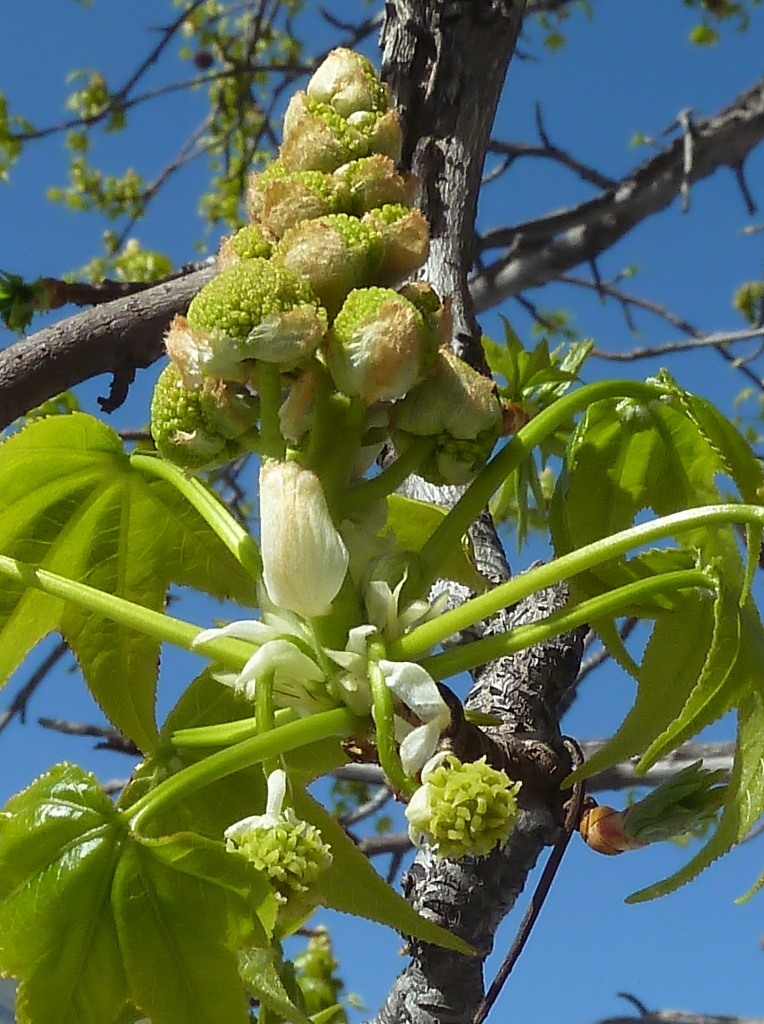
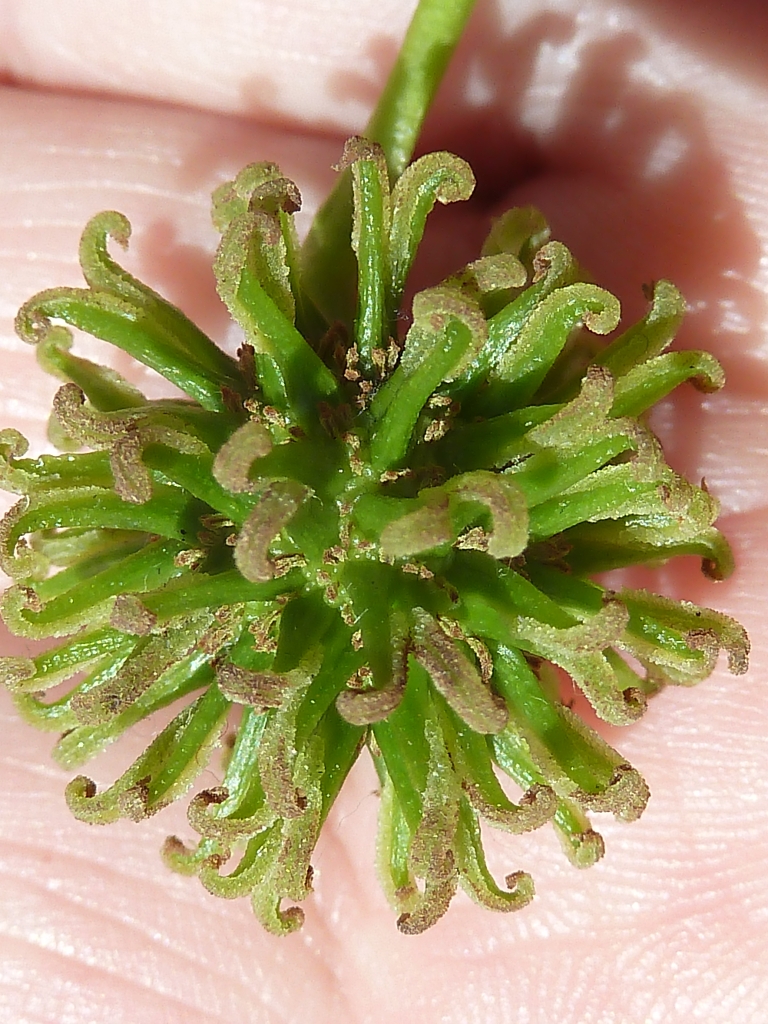
FlowersBloom Time is early spring (March–April in Nashville); Flower Color is greenish-yellow; male flowers in upright clusters; female flowers form a globose head on a pendulous stalk
-
Gum BallsSpiky, spherical seed pods 1 to 1.5 inches in diameter; contain many small seeds; ripen in late fall; persist into winter
-
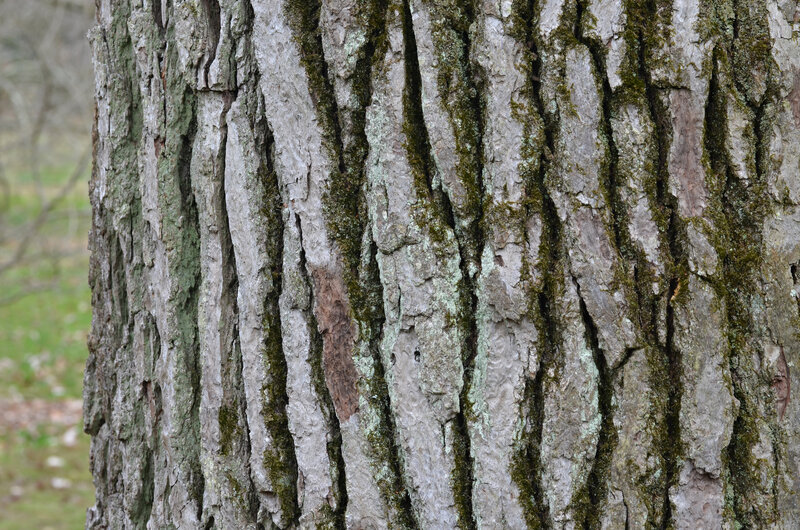
BarkGrayish-brown with deep furrows and narrow ridges; resembles alligator skin (hence “alligatorwood”); young bark is smoother and lighter
-
Crown & TrunkConical crown when young, maturing to a rounded or oval form; straight trunk with little taper; branches often develop corky, winged ridges
Bark & Crown Form
Mature bark is grayish-brown and deeply furrowed, with narrow, scaly ridges that give the trunk an alligator-hide appearance. This texture is the source of one of the tree's alternate names, alligatorwood. Branches on young trees often develop distinctive corky, wing-like ridges along the twigs, another useful identification feature.
The growth habit starts with a conical crown and straight trunk in youth. As the tree matures, the crown broadens into a rounded or oval shape. The strong central leader and symmetrical branching make Sweetgum an attractive specimen tree when given enough room to develop its natural form.
Bloom Time & Flowers
Sweetgum blooms in early spring, typically March through April in Nashville, coinciding with new leaf emergence. The Flower Color is greenish-yellow. Male flowers appear in upright, terminal clusters, while female flowers form a distinctive globose head hanging from a slender stalk. These inconspicuous flowers are wind-pollinated. The globose head of female flowers develops into the familiar spiky gum ball fruit by late fall.
Photo Gallery
Sweetgum Up Close
Care & Maintenance
Caring for Your Sweetgum
Sweetgum is a relatively low-maintenance tree once established, but understanding its needs – particularly regarding iron chlorosis and root system management – will help your tree thrive in Nashville's landscape.
Watering
Water deeply during the first year after planting – at least weekly during dry periods. Once established, Sweetgum tolerates moderate drought but performs best with consistent moisture. Trees near river bottoms and low areas rarely need supplemental water.
Soil & Iron Chlorosis
Iron chlorosis is the most common Sweetgum problem in Nashville. When planted in highly alkaline soils (pH above 7.5), leaves may yellow between veins. Treat with chelated iron, soil sulfur amendments, or trunk injections. A soil test can confirm if your pH is problematic.
Pruning Young Trees
Prune young trees to develop a strong central leader and remove competing branches. Sweetgum naturally forms a good structure, but early corrective pruning creates a stronger, more wind-resistant canopy. Prune during dormancy in late winter for best results.
Root System Awareness
Sweetgum has an aggressive, shallow root system that can lift sidewalks and invade drainage lines. Plant at least 15 feet from foundations, driveways, and sewer lines. Root barriers may be warranted in tight spaces. The root system spreads well beyond the canopy drip line.
Iron chlorosis causes yellow leaves with green veins and is the most common health issue for Sweetgum in Nashville. It occurs when alkaline soils prevent iron uptake. If your Sweetgum shows persistent yellowing, test your soil pH. Treatments include chelated iron sprays, soil acidification with elemental sulfur, or professional trunk injection. Trees in naturally acidic soils (like those in the Coastal Plain or along river bottoms) rarely experience this problem.
Sweetgum tolerates clay soils well – better than many other large tree species. Nashville's heavy clay is not a problem as long as drainage is adequate. The tree thrives in moist, slightly acidic to neutral soils but can adapt to a wide range of conditions. Avoid planting in extremely dry, compacted soils or in areas with poor drainage and standing water.
Unlike many ornamental trees that struggle in Nashville's dense clay, Sweetgum actually performs well in clay soils. Its aggressive root system breaks through compacted soil effectively. The key is ensuring the site has adequate drainage – Sweetgum handles wet soil but not permanently waterlogged conditions.
Through the Year
Sweetgum's Seasonal Calendar
The Bloom Time for Sweetgum in Nashville is early spring, typically March through April. The greenish-yellow flowers are inconspicuous but give rise to the developing gum balls throughout summer. The most dramatic season is fall, when brilliant fall color transforms the canopy into a mosaic of bright red, orange, purple, and gold. By late fall, the dried gum balls begin their descent, continuing through winter.
Ecosystem Role
Sweetgum's Wildlife Value
Sweetgum provides significant Wildlife Value across Nashville's urban and suburban ecosystems. As one of our Native Plants, it supports a wide range of wildlife species throughout the year.
Birds
Goldfinches, sparrows, chickadees, and other birds feed on small seeds from the gum balls. The dense canopy provides nesting habitat. Woodpeckers use the furrowed bark for foraging. Sweetgum seeds are an important winter food source when other seeds are scarce.
Small Mammals
Chipmunks, squirrels, and other small mammals cache and consume sweetgum seeds and extract the small seeds from gum balls. The tree's presence in urban areas provides critical food resources for these species throughout Nashville.
Insects & Pollinators
The Witch-hazel family member hosts numerous moth and butterfly caterpillar species. Luna moths and Promethea silkmoths use Sweetgum as a larval host plant. The early spring flowers provide nectar for emerging pollinators.
As a Native Plants species, Sweetgum supports significantly more wildlife than non-native alternatives. Its role in the Native Trees ecosystem of Nashville's forests and parks makes it an ecologically valuable tree – despite the inconvenience of the gum balls. The Wildlife Value of a single mature Sweetgum extends far beyond what most homeowners realize.
Local Focus
Sweetgum in Nashville
Sweetgum in Nashville
Sweetgum is native to the forests of Middle Tennessee and thrives in Nashville's climate and clay soils. It is one of the most common large native trees found across Davidson County, growing naturally in bottomlands, along streams, and on moist upland slopes.
-
Climate MatchNashville's warm summers, adequate rainfall, and mild winters are ideal for Sweetgum. The tree thrives in hardiness zones 5 through 9, and Nashville's Zone 7a is perfectly centered in its comfort range.
-
Clay Soils ToleranceNashville's heavy clay soils are well-suited to Sweetgum, which naturally grows in moist bottomland soils. Watch for iron chlorosis in areas with very high pH limestone-derived soils.
-
Fall ColorNashville's climate produces outstanding brilliant fall color on Sweetgum trees. Peak display occurs mid- to late October, with colors ranging from bright red to orange, purple, and gold.
-
Coastal Plain to NashvilleSweetgum's native range extends from the Coastal Plain of the southeastern United States inland through the Piedmont and into the Interior Highlands. Nashville sits within the tree's natural range from the Coastal Plain northward.
History & Uses
From Liquid Amber to Lumber
The history of Sweetgum is deeply intertwined with both Native Americans and the commercial timber industry of the southeastern United States. Its resin, wood, and even its name all carry fascinating stories.
Native Range
Eastern United States to Central America
Sweetgum's native range spans the eastern United States from Connecticut south to central Florida and west to eastern Texas and Oklahoma. It extends through Mexico into Central America (Honduras, Guatemala, Belize), making it one of the few North American trees with a tropical disjunct population. It thrives in river bottoms, flood plains, and moist upland forests throughout the southeastern United States.
Timber
Satin Walnut & Redgum Lumber
Sweetgum wood is divided commercially into satin walnut (the pale sapwood) and redgum (the reddish-brown heartwood). Both are used for furniture, cabinetry, veneer, plywood, and interior trim. Redgum heartwood is prized for its attractive figure and rich color. During the early 20th century, Sweetgum was among the top five most harvested hardwoods in the southeastern United States.
Cultural History
Native Americans & Resin
Native Americans used every part of the Sweetgum tree. The aromatic resin (liquid amber) served as chewing gum, wound treatment, and incense. The bark was brewed into medicinal teas. Spanish naturalist Francisco Hernández documented Indigenous use of Sweetgum resin in Mexico in the 1570s, calling it “liquidambar.”
Modern Use
Urban Forestry & Fruitless Cultivars
Today, Sweetgum remains widely planted as a shade tree across the eastern United States. Breeders have developed fruitless cultivars like ‘Rotundiloba’ that produce no gum balls, addressing the biggest homeowner complaint. The tree is recommended by urban forestry programs from North Carolina to Texas for its fast growth, Wildlife Value, and brilliant fall color.
Lookalikes & Relatives
Sweetgum vs. Other Trees
Sweetgum belongs to the Witch-hazel family (Altingiaceae), not to the maple family as many people assume. Its star-shaped leaves can cause confusion with maples, but the two are easy to tell apart. Here is how Sweetgum compares to other large tree species in Nashville.
Red Maple
Red maple leaves have 3 to 5 lobes and grow in opposite pairs. Sweetgum leaves have 5 to 7 lobes and grow alternately. This simple check – opposite vs. alternate – instantly separates them. Red maple also lacks gum balls.
Sugar Maple
Sugar maple has rounded lobe tips; Sweetgum lobes are sharply pointed. Sugar maple leaves grow opposite; Sweetgum leaves are alternate. Sugar maple rarely exceeds 75 feet in Nashville, while Sweetgum can reach 80+ feet.
Tulip Poplar
Both are fast-growing large tree natives. Tulip poplar has a distinctive four-lobed, squared leaf shape, tulip-shaped flowers, and grows taller (90+ ft). Sweetgum has star-shaped leaves, inconspicuous flowers, and gum balls.
Chinese Sweetgum
A close Witch-hazel family relative from Asia. Chinese sweetgum has 3-lobed leaves (not 5–7 like American sweetgum), smaller gum balls, and is less cold-hardy. Occasionally planted as an ornamental but not native to Nashville.
American Sycamore
Sycamore has large, shallowly lobed leaves with a different texture and distinctive peeling, mottled bark. Both are massive native trees found along Nashville waterways, but they look very different up close.
Blackgum
Despite the similar name, Blackgum is in a completely different family. Blackgum has simple, oval leaves (no lobes) and produces small berries, not spiky gum balls. Both are native and offer excellent brilliant fall color.
Video: Sweetgum Care Tips
Learn more about growing and maintaining Sweetgum trees in the Nashville landscape.
Common Questions
Sweetgum FAQ
Sweetgum is a fast-growing Native Trees species that thrives in Nashville's climate and clay soils. It offers brilliant fall color in bright red, orange, and purple, along with excellent Wildlife Value. The main drawback is the spiky gum balls (seed pods) that drop in late fall and winter, which can be a nuisance. If you have space and can tolerate the seed balls, it is an excellent shade tree.
You cannot completely stop a mature Sweetgum from producing gum balls. Growth regulators containing ethephon can reduce fruit production when applied at Bloom Time in early spring. Fruitless cultivars like Liquidambar styraciflua ‘Rotundiloba’ produce no seed pods at all and are an excellent option for new plantings where gum balls are unwanted.
Yellow leaves with green veins typically indicate iron chlorosis, caused by alkaline soils that prevent iron uptake. Nashville's limestone-derived soils can trigger this issue. Treatments include chelated iron applications, soil acidification with sulfur, or trunk injection. Leaf spot disease can also cause leaf discoloration but produces distinct brown or black spots rather than interveinal yellowing. A soil test is the best first year diagnostic step.
Sweetgum has a fast Growth rate, typically adding 13 to 24 inches of height per year. Young trees in favorable conditions with full sun and adequate moisture can grow even faster during their first year. Mature Height reaches 60 to 80 feet with a spread of 40 to 50 feet. The growth habit starts narrow and conical crown when young, broadening with maturity.
Yes. Gum balls, seed balls, and seed pods all refer to the same spiky, spherical fruit produced by the Sweetgum tree. Each gum ball develops from the globose head of female flowers and contains many small seeds. The balls ripen in late fall, dry out, and release their sweetgum seeds before dropping from the tree. This is why Sweetgum is also known as the Gumball Tree.
Indirectly, yes. The name Sweetgum comes from the aromatic resin (liquid amber) produced beneath the bark. Native Americans chewed this hardened resin as a natural chewing gum and used it medicinally. The genus name Liquidambar literally means “liquid amber,” referring to this fragrant resin. While modern chewing gum uses synthetic bases, the Sweetgum's resin was one of the original natural chewing gums. This connection to the liquid amber resin gives the tree both its common and Scientific Name.
Need Help With Your Nashville Trees?
Whether you need Sweetgum pruning, gum ball cleanup, iron chlorosis treatment, storm damage repair, or advice on the right tree for your property, Smith Works Tree Service is here to help.
Get a Free EstimateServing Nashville, Davidson County & Middle Tennessee