What Is It?
Tennessee's Gentle Giant
The tulip poplar is not actually a poplar at all. It is a proud member of the magnolia family, and it grows taller than almost any other native deciduous tree in eastern North America.
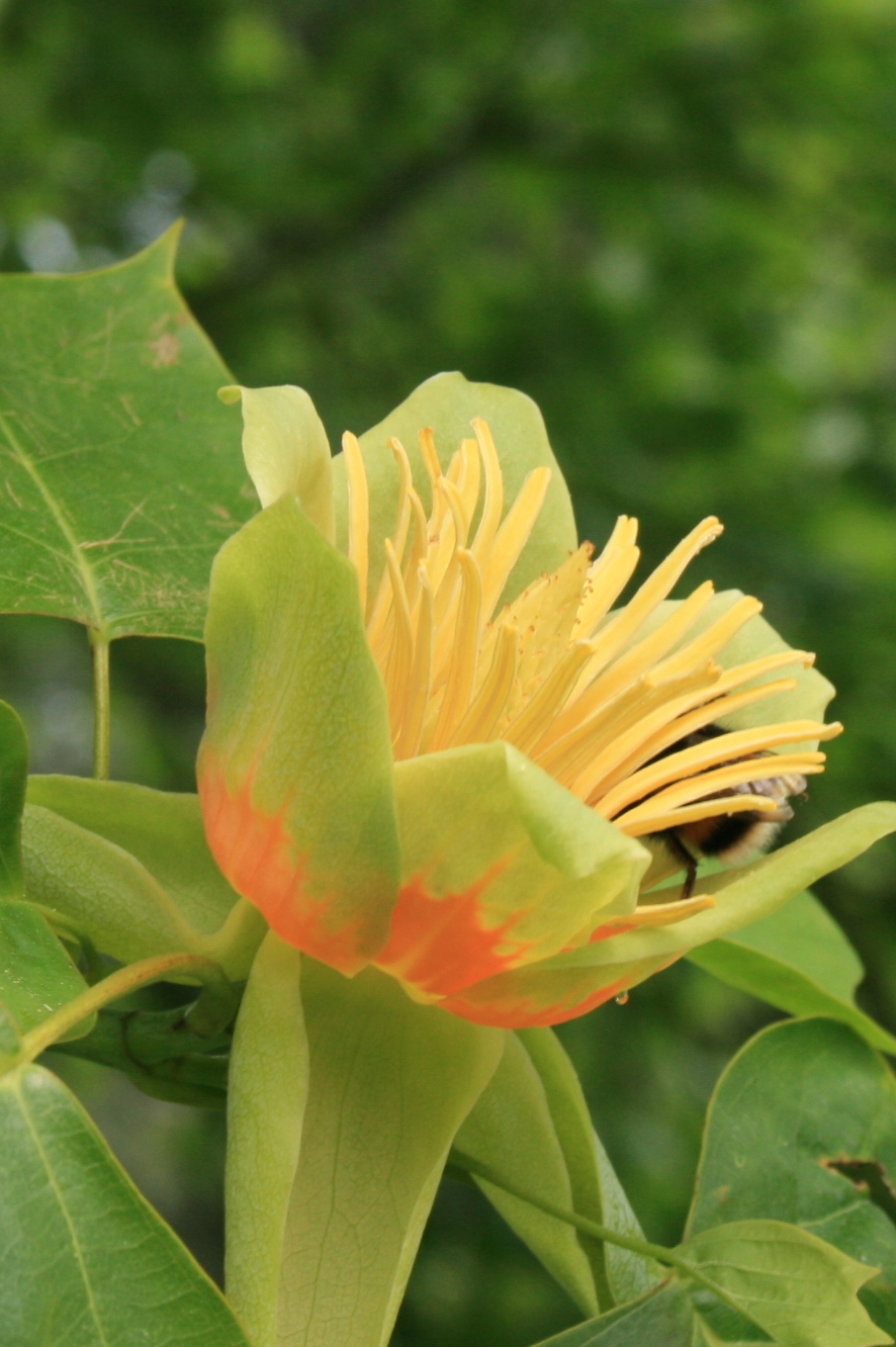
If you have ever walked a Nashville greenway in May and stopped at a cluster of orange-and-yellow blooms sitting high in the canopy, you have already met this tree. Its tulip-shaped flowers are some of the most striking produced by any hardwood in the eastern United States, yet they often go unnoticed because they bloom so far overhead.
The species ranges from the Appalachian Mountains down through the Deep South and north to southern Ontario, thriving wherever soils are rich and reasonably moist. Here in Middle Tennessee, we sit comfortably in its sweet spot. The yellow poplar (as it is also known) is the state tree of both Tennessee and Kentucky, dominating the canopy in forests across the region.
There is only one other species in the Liriodendron genus: Liriodendron chinense, the Chinese tulip tree. The two species diverged millions of years ago, making our native tulip poplar a true living fossil among eastern forests.
"Among the largest native trees in the eastern forests, the tulip poplar can reach cathedral heights, soaring past 100 feet with a canopy wide enough to cool an entire backyard."
Smith Works Tree Service – Nashville, TNIdentification
How to Recognize One
Once you know what to look for, the tulip poplar is one of the easiest trees to identify in Nashville's landscape. Every part of this tree has distinctive features.
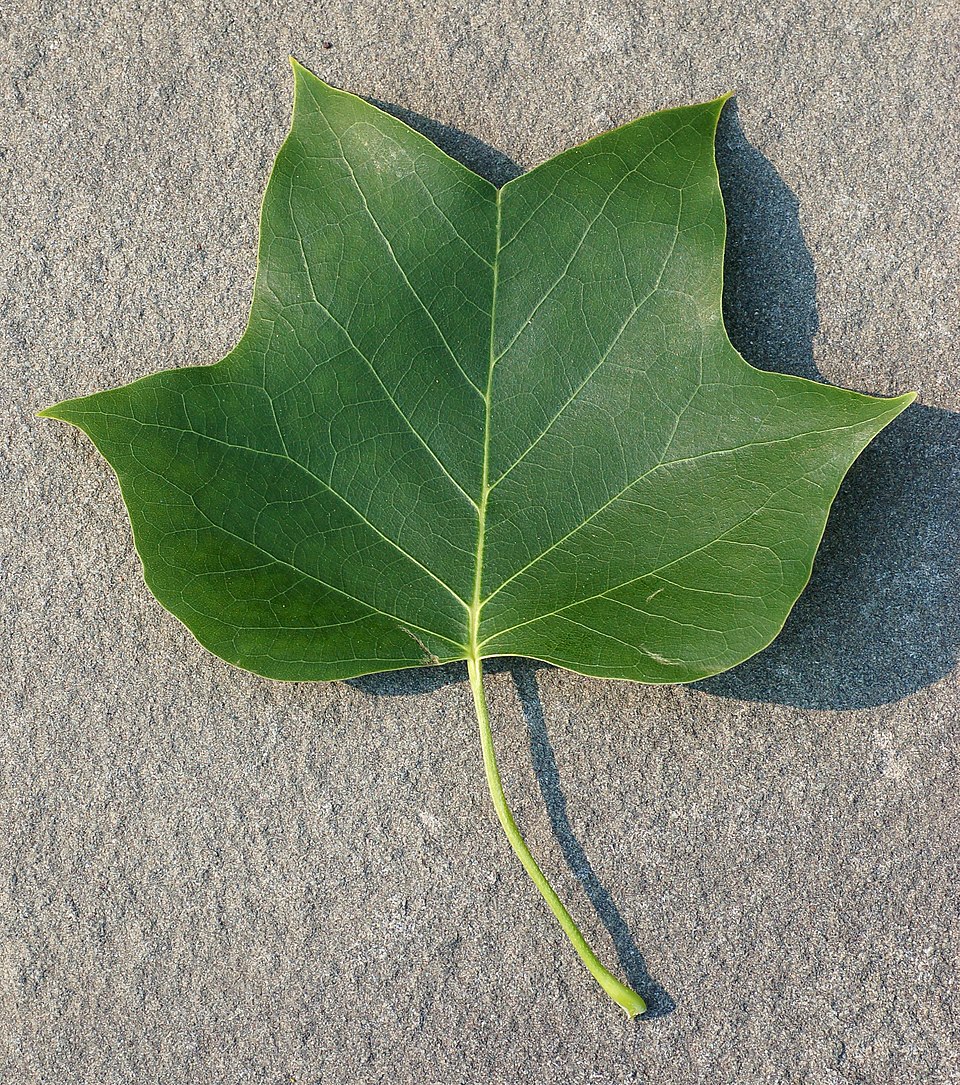
The leaf shape is the easiest clue. Each bright green leaf has four distinct lobes with a flat or slightly notched tip that some people say looks like a duck's bill. The alternate leaves measure 4 to 8 inches across, smooth and waxy on top, slightly paler underneath. In fall, they turn a striking golden yellow, providing vibrant fall color.
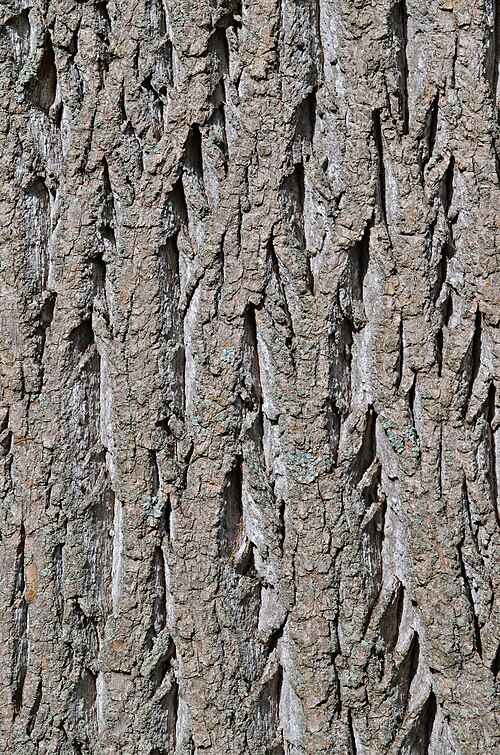
The bark description changes with age. Young trees have smooth, greenish-gray bark. Older trees develop deep, interlacing ridges of grayish-brown that are almost sculptural. The trunk grows impressively straight, which is part of why this was such a valued timber tree historically.
Leaf & Flower at a Glance
-
Leaf Shape4-lobed, saddle-shaped top; 5 to 6 inches wide; bright green, turning yellow in fall
-
Flower ColorGreenish-yellow petals with orange base; 2 inches across; tulip-shaped; blooms late spring
-
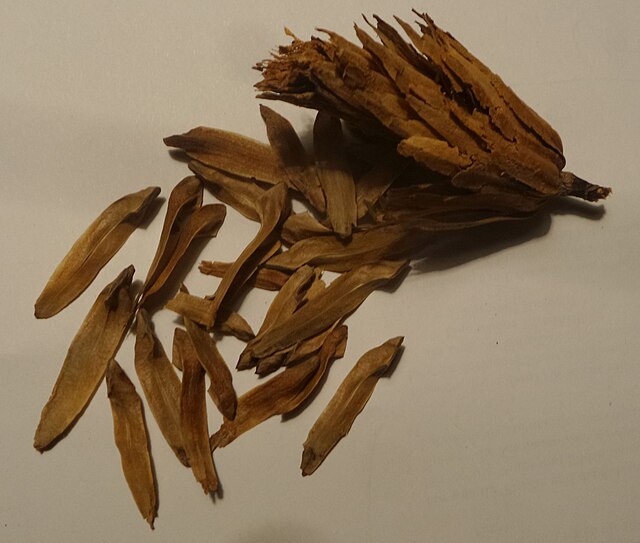
Fruit DescriptionDry, cone-like clusters of winged seeds; brown; matures in late fall and persists into winter
-
BarkSmooth gray-green when young; deeply ridged gray-brown at maturity
-
Genus NameLiriodendron – from the Greek for "lily tree." Specific epithet: tulipifera ("bearing tulips")
Fruit and Seeds
After flowering, the tulip poplar produces upright, cone-shaped clusters of brown fruits that persist into winter. Each cluster is made up of dozens of winged seeds (samaras) packed tightly together. The brown fruits gradually release seeds through late fall and winter, and empty cones often remain on the tree well into the following spring.
Bloom Season
Showy Flowers, Surprisingly High Up
The tulip poplar blooms in late spring – typically May here in Nashville. The flowers sit near the top of the canopy, so you may need to look up to catch them. Once you do, the display is unforgettable.
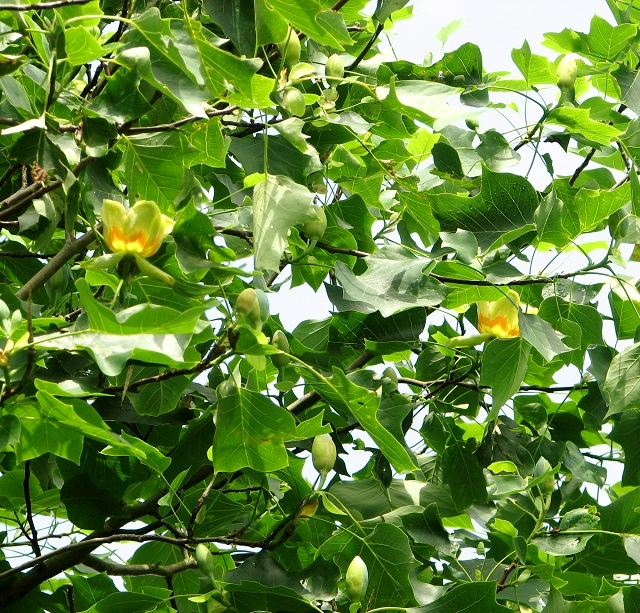
The Bloom
Each flower has six upright petals in greenish-yellow with a bold orange band at the base – a natural bullseye that guides pollinators straight to the nectar.
A Top Honey Plant
Tulip poplar is one of the most important honey plants in the eastern US. Bees produce a rich, dark, full-flavored honey – "poplar honey" is a regional delicacy.
Butterfly Host
Primary larval host for the eastern tiger swallowtail butterfly – Tennessee's state butterfly – and the striking tulip-tree silkmoth.
Siting & Growth
Fast-Growing Trees Need the Right Spot
The tulip poplar is an excellent shade tree for larger Nashville properties, but it needs room. This is one of the largest native trees you can plant, so site selection is everything.
Site Requirements
-
SunlightFull sun preferred (6+ hours). Tolerates partial sun when young but gets leggy in heavy shade.
-
Soil ConditionsMoist, well-drained soil. Tolerates Nashville's clay if drainage is adequate. Prefers slightly acidic pH (5.5 to 6.5).
-
Space NeededGive at least 40 feet clearance from structures, driveways, and septic lines. Mature canopy spreads 35 to 50 feet.
-
USDA HardinessZones 4 to 9. Nashville sits in Zone 7a – ideal conditions for vigorous growth.
-
Companion TreesOften found alongside sugar maple, eastern white pine, and other cove forest species in natural settings.
Nashville's native soil tends to be alkaline due to underlying limestone. If you're planting a tulip poplar, amend the planting area with composted leaves or pine bark mulch to lower soil pH. A soil test from the UT Extension office can tell you exactly where you stand.
Planting Steps
- Dig a hole 2 to 3 times the width of the root ball, but only as deep as the root ball itself. The root flare should sit at or slightly above ground level.
- Remove the container or burlap. If the tree is root-bound, gently loosen the outer roots.
- Backfill with the native soil mixed with 25% compost. Do not add fertilizer at planting time.
- Water deeply and immediately. Apply 3 to 4 inches of hardwood mulch in a ring around the tree, keeping mulch 4 to 6 inches away from the trunk.
- Stake only if the site is very windy. Remove stakes after one growing season.
For smaller Nashville yards, consider the 'Little Volunteer' cultivar. Developed at the University of Tennessee, it tops out at 35 feet – roughly half the height of the species. You still get the same tulip-shaped flowers, bright green leaves, and golden fall color in a more manageable package. Another compact option is 'Emerald City,' which matures around 55 feet with a tighter, more columnar form.
Tree Care
Keeping Your Tulip Poplar Healthy
These are tough, self-sufficient trees once established. But a few common issues are worth knowing – especially if you have one on your Nashville property.
Pruning & Structure
The tulip poplar's main structural weakness is its weak wood in older specimens. Professional pruning every several years removes co-dominant leaders and dead wood before storms do it violently. Avoid cutting terminal buds. Work with a certified arborist.
Watering Young Trees
For the first two to three years, water deeply (15 to 20 gallons) twice a week during dry spells. Nashville summers can be brutal, and a stressed young tulip poplar will show it through early leaf drop. A 3-inch mulch ring conserves moisture.
Watch for Verticillium Wilt
Verticillium wilt is a soil-borne fungal disease that can cause sudden branch dieback, often on one side first. There is no cure, but early detection, strategic pruning, and keeping the tree healthy can slow its spread. Call an arborist if you see sudden wilting.
Aphid Infestations
Tulip poplars can attract heavy aphid infestations. The telltale sign is sticky honeydew secretions dripping from the canopy onto cars and patios. Most healthy trees shrug off aphids, but targeted treatments are available for severe cases.
Fast growth produces relatively weak wood, making large limbs susceptible to breakage during Nashville's summer storms and ice events. Proactive pruning to remove deadwood and reduce canopy weight is the best defense. After major storms, have a certified arborist inspect for hidden damage.
Year-Round Guide
Seasonal Calendar for Nashville
Here's what to expect from your tulip poplar throughout the year.
Ecology
A Tree That Gives Back
Few yard trees do as much ecological work as the tulip poplar. Its wildlife value spans pollinators, birds, insects, and mammals.
Tiger Swallowtail
Tennessee's state butterfly uses the tulip poplar as its primary larval host. Plant one and you will have swallowtails every summer.
Birds & Nesting
The large canopy provides nesting sites for songbirds and cavity-nesting species. Brown fruit clusters feed small birds into winter.
Small Mammals
Squirrels use the seeds as a food source in fall. Deer leave mature trees alone – effectively deer resistant once established.
Tulip-Tree Silkmoth
This striking moth depends on the tulip poplar as a larval host – one of the most spectacular native moths in eastern forests.
Native Pollinators
A premier honey plant supporting both honeybees and dozens of native bee species. Beekeepers prize "poplar honey" for its deep, robust flavor.
Air & Shade
A mature tulip poplar provides cooling equivalent to 10 room-sized air conditioners running 20 hours a day. Essential for Nashville heat islands.
Local Focus
Tulip Poplar in Nashville
Tulip Poplar in Nashville
Middle Tennessee is prime tulip poplar country. The rolling topography, seasonal rainfall, and warm summers mimic the cove forest conditions where this tree thrives naturally in the Appalachian Mountains to our east.
-
Zone 7 AdvantageNashville's long growing season and mild winters mean vigorous growth year after year.
-
Rainfall & DrainageNashville averages about 47 inches of rain per year – plenty for this moisture-loving species.
-
Street Tree UseThe tulip poplar's upright form and fast growth make it ideal for large right-of-way plantings.
-
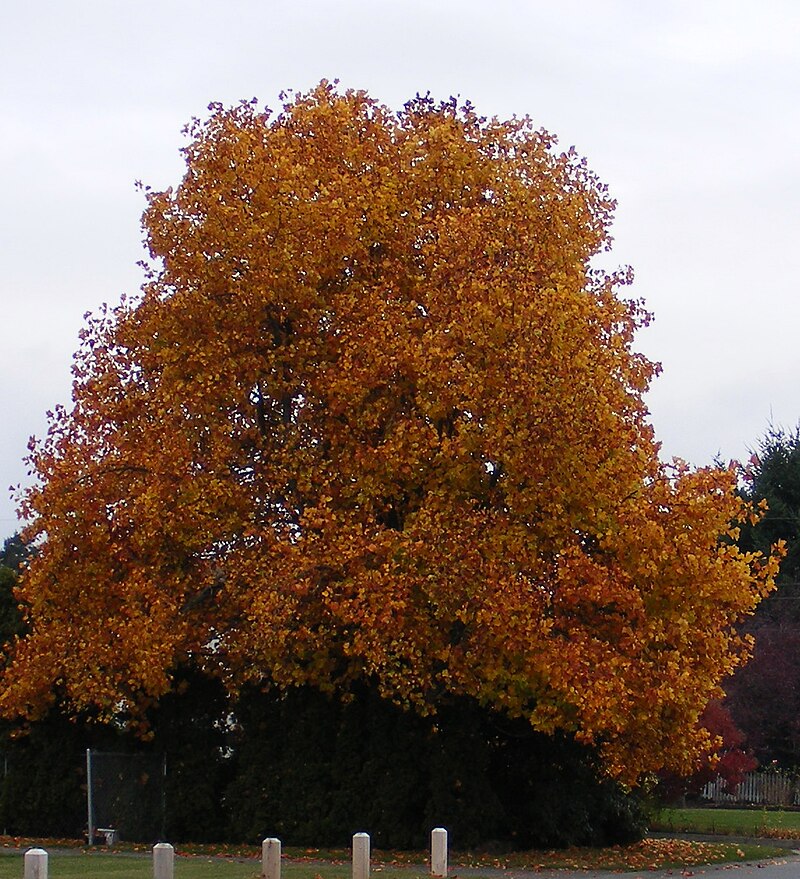
Fall ColorCome October, tulip poplars put on one of the most reliable fall color shows in the region.
History & Timber
Centuries of Use
Long before it became a beloved shade tree, the tulip poplar was valued for everything from canoe-building to cabinet-making.
Pre-European Settlement
Dugout Canoes
Native Americans prized the tulip poplar for its straight, tall trunks. Its size made it ideal for hollowing into dugout canoes – some large enough to carry dozens of people. The inner bark was also used in traditional medicine.
Colonial Era – 19th Century
The Most Valuable Timber Tree
Settlers recognized it as a very valuable timber tree. Tulipwood is lightweight, easy to work, holds paint beautifully, and resists warping. It became the dominant wood for interior finish work in American homes throughout the 18th and 19th centuries.
Modern Uses
Furniture, Instruments & Paper Pulp
Today, tulip poplar wood remains popular for furniture, cabinetry, painted millwork, and musical instruments. It is also a major source of paper pulp across the South.
Botany Note
Not Just One Species
The tulip poplar has one close living relative: Liriodendron chinense, the Chinese tulip tree. The two were separated when the ancient supercontinent broke apart – a reminder of how old this genus is.
Video: Tulip Poplar Care Tips
Watch this helpful overview of the tulip poplar from our favorite tree care resources.
Video: Tree Talk: Tulip-poplar
Common Questions
Frequently Asked Questions
Tulip poplars are among the fastest-growing trees you can plant in Nashville. Expect 2 to 3 feet of height per year in good soil conditions with full sun and adequate water. Young trees in favorable spots can reach 25 to 30 feet within a decade.
In Nashville landscapes, mature height is typically 70 to 90 feet with a canopy spread of 35 to 50 feet. In protected Appalachian cove forests, specimens can exceed 150 feet, making them among the largest native trees in eastern North America.
If you have a larger lot, absolutely. The tulip poplar is an outstanding shade tree that thrives in Nashville's Zone 7a climate. It needs space – at least 40 feet of clearance from buildings. For smaller properties, the 'Little Volunteer' cultivar offers the same beauty in a more compact form.
No. Despite the common name, the tulip poplar is not related to true poplars (genus Populus). It is a member of the magnolia family, closely related to magnolias and sometimes called a tulip magnolia.
In Nashville, tulip poplars bloom in late spring to early summer, typically May through June. The yellow flowers with their signature orange band are often overlooked because they appear high in the canopy on mature trees.
They can be. Tulip poplars shed large leaves in fall, drop flower petals in late spring, and release seeds through winter. Aphid honeydew can coat surfaces below the canopy in summer. If tidiness is a top priority, be aware of these seasonal patterns before planting.
A well-maintained tulip poplar in a Nashville landscape can live 150 to 200 years or more. Wild specimens in protected forests have been documented at over 300 years old.
Need Help?
Have a Tulip Poplar That Needs Attention?
Whether it needs a structural prune, an aphid problem investigated, storm damage assessed, or you simply have questions – our Nashville arborists are happy to help.
Get in TouchNo obligation – just honest, local tree expertise.