What Is It?
The King of Eastern Oaks
White oak is not just another large tree. It is a keystone species of eastern forests, supporting more forms of wildlife than almost any other woody plant on the continent.
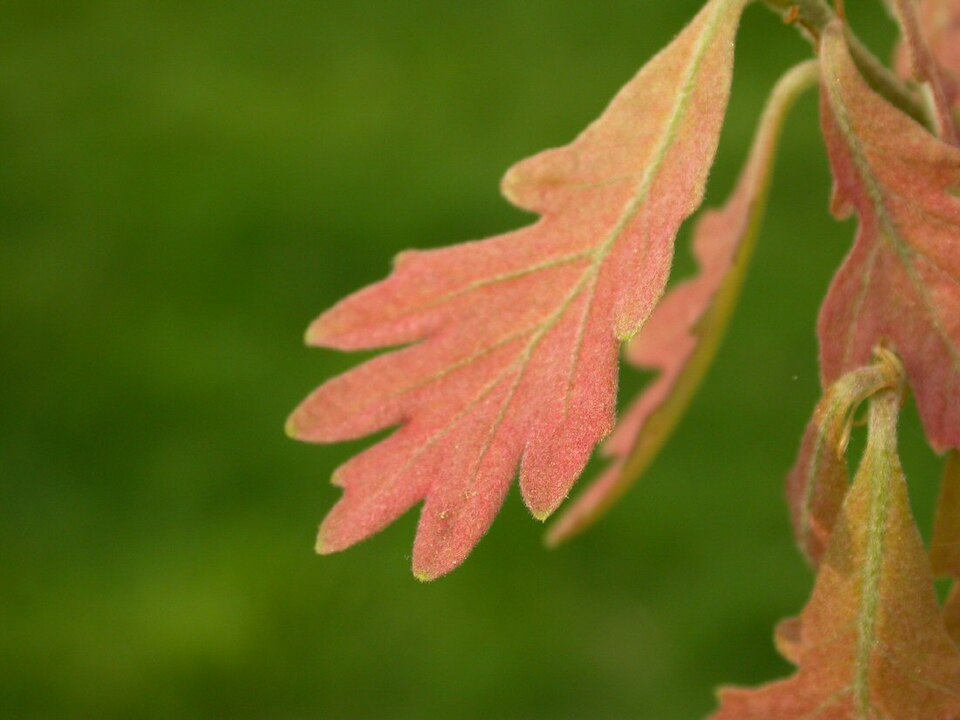
The white oak (Quercus alba L.) is one of the most recognizable and respected native trees across the eastern United States. Its common name refers to the light gray bark that distinguishes it from the darker-barked members of the red oak group. As a deciduous tree, it drops its lobed leaves each fall after one of the finest fall color displays of any oak species – deep reddish-brown to wine-red tones that glow in the late-afternoon Nashville sun.
The species is native across a wide range of Eastern North America, stretching from southern Maine down through North Carolina, across the Appalachian Mountains, and west to Minnesota and eastern Texas. Here in Middle Tennessee, white oak is a defining presence in upland hardwood forests, particularly on dry upland slopes with well-drained soil. The tree's Latin name, Quercus alba, translates simply to "white oak" – the genus name Quercus is the ancient Latin word for oak.
This is a genuinely long-lived tree. Healthy specimens routinely survive 200 to 400 years, and documented trees have exceeded 450 years of age. The famous Wye Oak in Maryland stood for over 460 years before falling in a 2002 thunderstorm. White oak is the state tree of Connecticut, Illinois, and Maryland, and appeared on the Connecticut state quarter.
"If I could plant only one tree on a property and wanted to make the greatest ecological impact, it would be a white oak. No other tree supports as much life."
Doug Tallamy – Entomologist & Author of The Nature of OaksIdentification
How to Recognize One
White oak has several features that set it apart from other oak species found in Nashville. Once you know what to look for, identification is straightforward in any season.
Leaf Description
The leaves are the best starting point. Each leaf has 7 to 9 rounded, fingerlike lobes – never with bristle tips (that would be a red oak). The leaf margin is smooth and deeply indented between lobes. Mature leaves measure 5 to 9 inches long with a distinctive leaf arrangement that is alternate along the branch.
Young leaves emerge in spring with a pinkish or reddish tint and are often covered in fine, silvery hairs. As they mature, the upper surface becomes dark green and slightly glossy, while the underside is paler and whitish. The fall color is one of white oak's finest traits: leaves turn deep wine-red, reddish-brown, or rich burgundy, often persisting well into winter on younger trees.
Leaf, Bark & Fruit at a Glance
-
Leaf Description5 to 9 inches long; 7 to 9 rounded fingerlike lobes; dark green upper surface; alternate leaf arrangement
-
Flower DescriptionMale flowers are yellow-green drooping catkins (3 to 4 inches); female flowers are tiny reddish spikes at leaf bases
-
Fruit DescriptionBrown acorn, 3/4 inch long, enclosed 1/4 by a warty cap; light brown to tan; matures the first year
-
Bark DescriptionLight gray, flaky, with loose vertical plates; older trees develop a distinctive pale, ashy appearance
-
Genus NameQuercus (Latin for oak); species: alba (white). Sometimes listed as Q. alba or Quercus alba L.
Bark Description
The bark is one of the surest identification features. Mature white oak bark is light gray and breaks into thin, loose, flaky plates or vertical strips – quite different from the deep-furrowed dark bark of red and black oaks. Younger trees have smoother bark that gradually develops the characteristic scaly texture. The pale, ashy appearance is where the common name "white oak" originates.
Flower Color and Bloom Time
White oak blooms in April and May, just as new leaves emerge. The male flowers appear as slender, drooping catkins – yellow-green tassels 3 to 4 inches long that shed pollen on the wind. The female flowers are tiny, reddish, and easy to miss, clustered at the base of new leaves on the current year's growth. The flower color is subtle – pale yellow-green on the catkins – but millions of pollen grains make the tree conspicuous during peak bloom.
Fruit & Seeds
The Mighty Acorn
Acorns are central to the white oak's ecological role and its cultural significance. Unlike red oaks, whose acorns take two years to mature, white oak acorns ripen during the first year – a trait shared by all members of the white oak group.
Fruit Color & Size
Each brown acorn is about 3/4 inch long, oblong, and enclosed about one-quarter by a bumpy, warty cap. The shell is a light brown that darkens slightly as it dries.
First-Year Maturity
White oak acorns complete their life cycle in a single growing season. Pollinated in spring, they ripen by September and October – dropping in time for fall wildlife feeding.
Acorn Production
Acorn production varies by year. Mast years – when trees produce bumper crops – occur roughly every 4 to 10 years, flooding the forest with wildlife food.
White oak acorns have lower tannin levels than red oak acorns, making them sweeter and more palatable. This makes them the preferred food source for white-tailed deer, blue jays, wood ducks, wild turkey, squirrels, and black bear. Animals actively seek out white oaks first during fall acorn production season.
Siting & Growth
Planting a Tree That Outlasts Generations
White oak is a slow growing tree – expect about 12 to 14 inches of height per year under good conditions. That patience is rewarded with a tree that can stand for centuries. Proper site selection is critical because transplanting mature oaks is nearly impossible due to their deep taproot.
Site Requirements
-
SunlightFull sun is essential for best form and acorn production. Tolerates light shade when young but develops a thinner canopy without adequate light.
-
Soil ConditionsPrefers well-drained soil with slightly acidic pH. Handles dry soils and performs well on Nashville's dry upland slopes. Avoid consistently wet sites – soil moisture should drain reasonably well.
-
Space NeededPlan for the full widespreading crown – at least 50 feet clearance from structures, driveways, and power lines. This large tree needs room to reach its potential.
-
USDA HardinessZones 3 to 9. Nashville sits in Zone 7a, well within the optimal range for vigorous growth.
-
Growth RatesSlow growing: 12 to 14 inches per year. Young trees may add up to 2 feet annually in ideal conditions with adequate soil moisture.
Planting Steps
- Select a site in full sun with well-drained soil. Avoid areas with compacted clay or standing water. White oak naturally favors dry upland slopes and ridgetops.
- Dig a hole 2 to 3 times the width of the root ball but no deeper. The root flare must sit at or slightly above grade level.
- Handle the taproot carefully. White oak seedlings develop a strong taproot early – damaging it reduces long-term stability.
- Backfill with native soil. Do not amend heavily; white oak is adapted to Nashville's natural soil conditions.
- Water deeply at planting and apply 3 to 4 inches of hardwood mulch in a ring. Keep mulch 4 to 6 inches from the trunk.
Unlike many shade trees, white oak transplants best as a small seedling or sapling (under 6 feet). Larger balled-and-burlapped trees often struggle because the taproot gets severed during harvest. A 3-foot white oak seedling planted today will often outpace a 10-foot transplant within a few years.
Tree Care
Keeping Your White Oak Healthy
Established white oaks are remarkably self-sufficient. Most problems arise from construction damage, soil compaction, or improper pruning – human causes, not natural ones.
Pruning Best Practices
Prune only in late fall or winter when the tree is dormant. Spring and summer pruning creates open wounds that attract sap beetles carrying oak wilt spores. Remove dead, crossing, and co-dominant branches. Work with a certified arborist for mature specimens.
Watering Young Trees
For the first two to three growing seasons, water deeply (15 to 20 gallons) once a week during dry spells. Mature white oaks rarely need supplemental water – they are adapted to Nashville's seasonal rainfall patterns and handle dry soils well once established.
Oak Wilt Prevention
Oak wilt is the most serious disease threat to white oaks across the eastern United States. This fungal disease spreads through root grafts between nearby oaks and via sap-feeding beetles. Avoid pruning from April through July. Paint any unavoidable wounds immediately.
Watch for Stress Pests
The two-lined chestnut borer attacks oaks weakened by drought, construction, or soil compaction. Oak leaf blister causes raised spots on leaves but is mostly cosmetic. Oak skeletonizers can defoliate branches but rarely threaten tree health.
The single biggest threat to established white oaks is root zone disturbance. Construction, grade changes, soil compaction from heavy equipment, and trenching within the drip line can kill a centuries-old tree within 3 to 5 years. If you have a mature white oak, protect it during any building project by fencing the entire area under the canopy.
Year-Round Guide
Seasonal Calendar for Nashville
Here is what to expect from your white oak tree through the seasons in Middle Tennessee.
Ecology
A Tree That Feeds the Forest
No native tree in the eastern United States supports more forms of life than the oak. White oak is the centerpiece of the forest canopy, providing wildlife food, shelter, and nesting sites.
White-Tailed Deer
White-tailed deer actively seek white oak acorns over all other mast. The sweeter, low-tannin acorns are their top fall food source in Nashville woodlands.
Blue Jays & Wood Ducks
Blue jays cache thousands of white oak acorns, dispersing the tree across the landscape. Wood ducks and wild turkey depend on them as a critical food source.
Black Bear
In the southern Appalachian forests, black bear rely heavily on white oak acorn production to build fat reserves before winter hibernation.
Edwards' Hairstreak
The Satyrium edwardsii (Edwards' Hairstreak butterfly) uses white oak as its exclusive larval host. Over 500 caterpillar species feed on oak leaves.
Squirrels & Small Mammals
Squirrels are the primary seed dispersers. They bury acorns that they forget to retrieve, planting the next generation of oaks across neighborhoods and forests.
Forest Canopy & Shade
A single mature white oak can shade over 5,000 square feet. Its widespreading crown cools neighborhoods and reduces energy costs through Nashville's hot summers.
Oak Family
Related Oak Species in Nashville
The white oak group includes several other native oaks found across Middle Tennessee. Understanding the differences helps with identification and choosing the right tree for your property. The red and black oaks form a separate group with bristle-tipped leaves and acorns that take two years to mature.
Bur Oak
Bur oak produces the largest acorns of any North American oak, with a distinctive fringed cap. More drought-tolerant than white oak. Excellent for large Nashville properties.
Post Oak
Post oak thrives on the driest, poorest sites where other oaks struggle. Its cross-shaped leaves are easy to identify. Very common on rocky Nashville hillsides.
Chestnut Oak
Chestnut oak has large, wavy-edged leaves (not lobed) and deeply furrowed bark. Common in the southern Appalachian forests and on Nashville ridgetops.
Swamp White Oak
Swamp white oak tolerates wetter soils than other white oaks, making it useful near streams or low areas. Two-toned leaves with white undersides.
Black Oak
Black oak (Quercus velutina) is a red oak group member with glossy, bristle-tipped leaves and dark, blocky bark. Common throughout Nashville upland forests.
English Oak
English oak (Quercus robur) is not native but is planted ornamentally. Shorter-lobed leaves and stalked acorns distinguish it from American white oak.
To distinguish white oak from other eastern oak species, check three features: leaf lobes should be rounded with no bristle tips, bark should be light gray and flaky (not dark and deeply furrowed), and acorns should be on short stalks with a warty cap covering about one-quarter of the nut. A good field guide to woody plants of the eastern United States is invaluable for learning your local oaks.
Local Focus
White Oak in Nashville
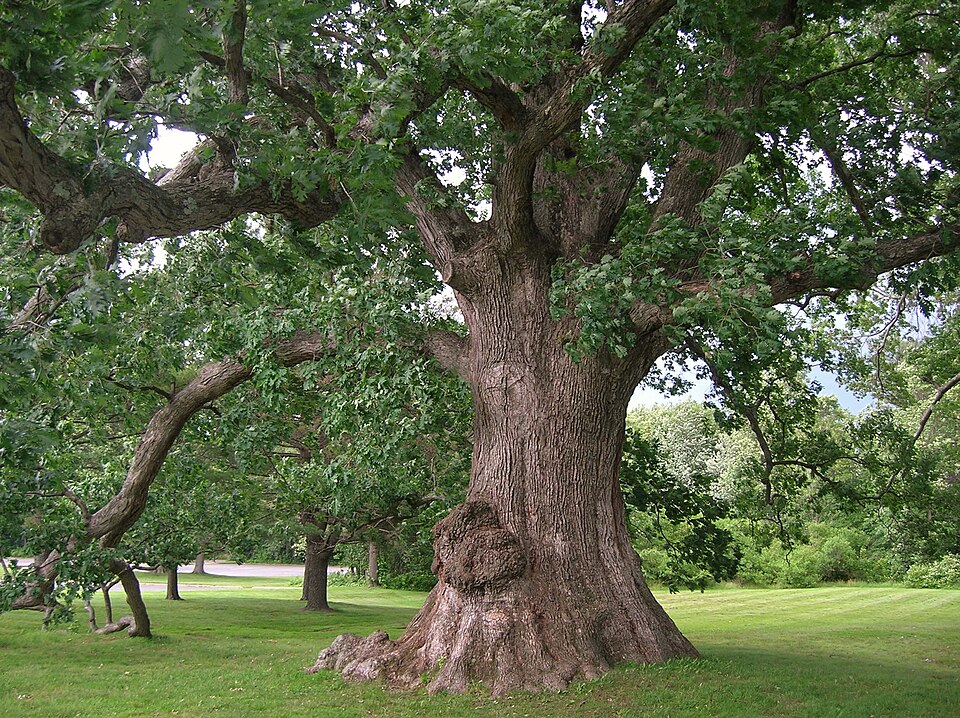
White Oak in Nashville
Middle Tennessee's limestone-influenced landscape and rolling topography provide excellent habitat for white oak, particularly on well-drained ridgetops and slopes. The tree is a defining presence in Nashville's older neighborhoods and parks.
-
Zone 7a ClimateNashville's hot summers and mild winters are ideal. White oak handles our occasional ice storms and drought cycles well.
-
Soil & DrainageWhite oak prefers the acidic, well-drained soils found on Nashville's ridgetops. Avoid planting in low areas where soil moisture stays consistently high.
-
Fall ColorWhite oaks provide some of Nashville's best fall color. The deep reddish-brown to wine-red tones persist longer than most other deciduous trees.
-
Forest ResourcesContact the Tennessee Department of Forestry or the Forest Service for advice on managing white oak on larger rural properties around Nashville.
History & Timber
Centuries of Use
White oak wood is among the most prized hardwoods in North America. Its combination of strength, durability, and water resistance has made it essential to American industry for centuries.
Pre-European Settlement
Native American Food Source
Native Americans relied on white oak acorns as a staple food. The sweet, low-tannin nuts were ground into flour for bread and porridge. Acorns were also leached and processed into a calorie-rich staple that could be stored through winter. The bark was used in traditional medicine.
Colonial Era – 19th Century
Ship Timbers & Cooperage
White oak's water resistance made it the premier wood for ship timbers, including the hull of the USS Constitution ("Old Ironsides"). Its tight grain resists the passage of liquids, which is why it became the standard for wine barrels, whiskey casks, and other cooperage. This use continues today – virtually all bourbon and many fine wines age in American white oak barrels.
Modern Uses
Flooring, Furniture & Bourbon
Today, American white oak remains one of the most commercially valuable hardwoods. It is used for hardwood flooring, high-end furniture, cabinetry, and fence posts. The Tennessee whiskey and bourbon industry depends heavily on white oak for aging barrels. The U.S. Department of Agriculture Forest Products Laboratory and the Northeastern Forest Experiment Station have published extensive research on its wood properties.
Botany Note
Varieties & Classification
Botanists have described several regional forms, including Quercus alba var. subcaerulea and Quercus alba var. subflavea, though these are not widely recognized today. The USDA Plants database and the Forest Service list it simply as Quercus alba L. White oak hybridizes naturally with bur oak, swamp white oak, and other members of the white oak group.
Video: White Oak Care Tips
Expert guidance on caring for white oaks in the Nashville landscape.
Common Questions
White Oak FAQ
White oak is a slow growing tree, typically adding 12 to 14 inches of height per year. Because of its slow growth rates, a white oak planted today will take decades to reach full maturity, but the wait is rewarded with a remarkably long-lived tree that can stand for centuries.
A mature white oak tree typically reaches 60 to 80 feet tall with a widespreading crown of 60 to 80 feet. In open settings, the canopy often spreads wider than the tree is tall. Old-growth specimens in the Appalachian Mountains have exceeded 100 feet.
Absolutely. White oak is one of the best shade trees for larger Nashville properties. As a native tree, it supports over 500 insect species that feed songbirds, produces valuable wildlife food, provides outstanding fall color, and thrives in full sun with well-drained soil.
The white oak group has rounded lobed leaves without bristle tips, light gray bark, and acorns that mature the first year. Red oaks (including black oak, Quercus velutina) have pointed bristle-tipped lobes, darker bark, and acorns that take two years. White oak acorns are sweeter and preferred by wildlife.
The most serious threat is oak wilt, a fatal fungal disease. Other issues include the two-lined chestnut borer (which attacks stressed trees), oak leaf blister, and oak skeletonizers. Protect trees by avoiding spring pruning wounds, maintaining soil moisture during drought, and keeping the root zone undisturbed.
White oak can work as a street tree in wide medians or large parkways, but it is not ideal for narrow spaces. Its widespreading crown and sensitivity to root compaction make it better suited for parks and larger residential lots. For tighter spaces, consider swamp white oak or Shumard oak, which tolerate urban conditions better.
Need Help With Your Nashville Oaks?
Whether you need oak pruning, health assessment, storm damage cleanup, or professional advice about the trees on your property, Smith Works Tree Service is here to help.
Get a Free EstimateServing Nashville, Davidson County & Middle Tennessee