

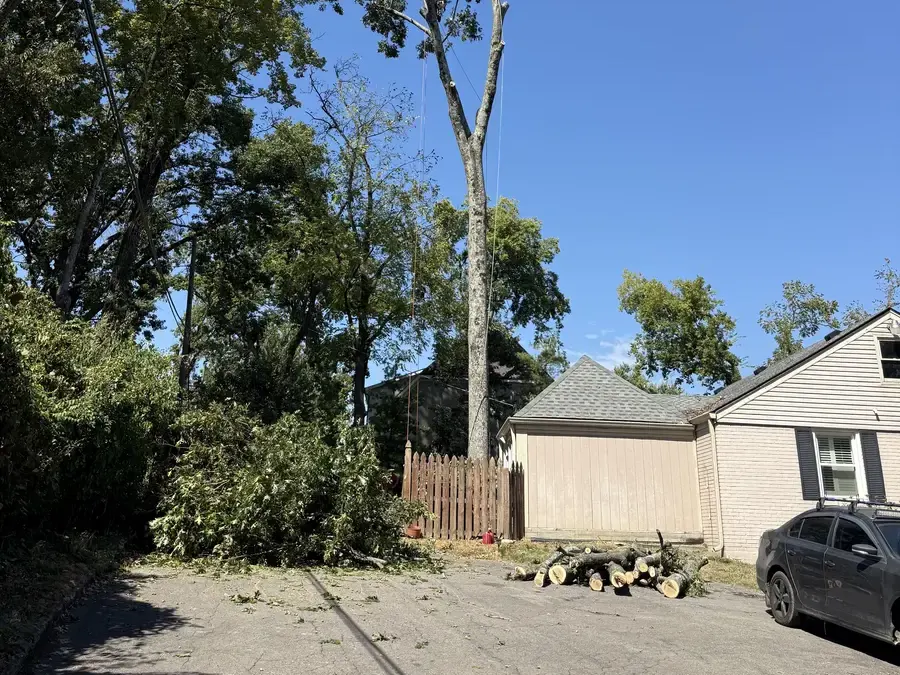
If you've found a big limb lying under one of your oak trees this fall, you're not alone.
Over the last few weeks, I've done a lot of estimates on large oaks around Nashville that have dropped heavy branches. The common thread is the weather: a very hot, very dry September on top of a drought.
I'm Tanner Smith, owner of Smith Works Tree Service and Land Management here in Nashville. Late summer is always the dry time of year in Middle Tennessee, so heat and dry weather in September are normal for us. For it to be drier than the dry time of year, it has to be really dry. This year, it was.
Below I'll cover why drought-stressed hardwoods drop limbs, the warning signs to check in your own yard, what you can do right now, and why this winter is a good reason to get your trees looked at early.
How Dry Was September 2026 in Nashville?
Only a trace of rain fell at Nashville's official weather station during the entire month, according to the National Weather Service's September 2026 climate report for Nashville. A normal September brings about 3.8 inches. The previous record low for the month was 0.02 inches in 2019, which makes this the driest September on record.
It was hot, too. The average daily high was 93.2 degrees, almost 9 degrees above normal, and 22 days reached 90 or higher.
The drought has only gotten worse since. On the U.S. Drought Monitor map for October 20, all of Davidson County is in severe drought, and almost half of the county is in extreme drought.
Why Drought-Stressed Hardwoods Drop Big Limbs
This is what I've been explaining on almost every estimate lately.
When it stays this hot and dry for this long, big hardwoods like oaks don't get enough water. The wood carries less moisture, and once it dries out past a certain point, it gets more brittle. A long, heavy limb the tree has held up for decades becomes too much, and it breaks off under its own weight.
Limbs failing on calm days has a name: summer branch drop. UC Davis professor Richard Harris published research on it, and UC Master Gardeners (University of California Agriculture and Natural Resources) sum up what's known:
- It isn't caused by wind and often happens in the afternoon on hot, calm days
- Oaks are a classic case, but elm, ash and other species are affected too
- The break usually happens 3 to 12 feet out from the trunk
- Many of the failed limbs look sound from the outside
- A tree that has dropped one limb this way is more likely to drop another
Researchers still don't agree on the exact cause, but drought stress may play a role.
The bigger concern is that drought damage often shows up late. The University of Tennessee Extension publication Dieback and Decline of Trees (SP686) explains that when the upper soil dries out, many of a tree's absorbing roots die, and symptoms can be delayed two or more years while the tree uses up its food reserves. A tree that looks fine today can still be feeling this September a few seasons from now.
Warning Signs to Check in Your Trees
Walk your property and look closely at the larger trees, especially anything that could reach your house, driveway or a play area. Here's my checklist:
- Dead wood in the canopy. Bare, leafless branches in the upper crown are often the first to come down.
- Cracks and splits. Check along major limbs and where they join the trunk.
- Wilting that doesn't recover. UT Extension's Tree News You Can Use notes that leaves drooping in the afternoon heat is normal, but they should recover overnight. If they don't, the tree probably needs water.
- Scorched, early-colored or falling leaves. UT Extension lists yellowing or browning, early fall color, dropping leaves and curled or scorched edges as signs of drought stress.
- A thinning crown. A canopy that looks noticeably thinner than in past years.
- Fungal conks or mushrooms. Shelf-like growths on the trunk or at the base usually point to decay inside the wood.
- A new lean. A tree leaning more than it used to, or soil cracking or lifting at the base.
- A limb that has already dropped. One failure often means more could follow.
If a big tree near your home shows one or more of these, have someone take a closer look. My guide to the signs a tree needs to be removed goes into more detail on each one.
What You Can Do Right Now
Water established trees the right way
Watering a mature tree is different from watering your lawn. Based on the UT Extension guide Watering Trees and SP686:
- Water beneath the crown and a few feet past the drip line. There's no need to water closer than 3 feet to the trunk.
- Water deeply and less often. In severe drought, about once a week, so the moisture reaches 5 to 7 inches deep.
- Use a soaker hose or drip line so the water soaks in slowly.
- Water in the evening or at night.
- Spread organic mulch under the tree and water over the top of it.
- Once you start, keep watering until the drought breaks.
Get dead and heavy limbs pruned before winter
Removing dead wood and taking weight off long, heavy limbs takes stress off the tree before winter weather adds more.
For oaks, the timing works in your favor. As I explained in my article on when to trim oak trees in Nashville, the dormant season from December through February is the safest window to prune oaks and lower the risk of oak wilt. Book an inspection now and we can plan the work for that window. A limb that's already hanging over your house shouldn't wait, though.
Our tree trimming service in Nashville covers deadwood removal, weight reduction and structural pruning. If a heavy limb is already cracked or hanging, see our tree limb removal service.
Why This Winter Matters: A Strong El Niño
The other thing on my mind this fall is the winter ahead.
An El Niño Advisory is in effect. In its October 8 update, NOAA's Climate Prediction Center said a strong-to-very strong El Niño is likely through January–March 2027, with a high chance of a historic event stronger than any El Niño since 1950. That's what people mean when they say "super El Niño."
What does that mean for us? NOAA's 2026–2027 Winter Outlook favors a wetter-than-average winter across the southern part of the country, from the Southwest to the Southeast.
More winter moisture means more chances for freezing rain whenever cold air arrives at the same time. And we all remember last January. My article on tree damage after Winter Storm Fern shows what that ice did to trees across Nashville.
No outlook can tell us whether we'll get another ice storm. But according to University of Illinois Extension:
- Ice over half an inch thick can cause heavy damage to trees, especially combined with wind
- Silver maples, which took a beating during Fern, are one of the species prone to ice damage
- Regular pruning is the best available preventive care for storm damage, including ice storms
- Pruning takes weight off the ends of limbs with weak branch unions, and in some cases cabling or bracing adds support
A drought-stressed tree with dead wood and brittle limbs going into a wet winter is exactly the kind of tree I want to look at before the first winter storm.
When to Call a Professional
Give us a call if:
- A large tree has dropped a limb this fall
- You see dead wood, cracks or fungal growth on a tree that could reach your home, garage, driveway or vehicles
- A tree has started to lean or the soil is lifting at its base
- Limbs hang over your roof
- You want to know whether your trees are ready for winter
For trees touching or near power lines, contact Nashville Electric Service.
If a limb has already come down on your house or is hanging dangerously, our emergency tree service is available 24/7. If a tree can't be saved, I'll walk you through your tree removal options.
Most of the trees I look at need careful pruning, and a few need to come down. Either way, I'll tell you straight what needs attention now and what can wait.
Call us at 615-782-9966 for a free on-site estimate before winter weather arrives.
Frequently Asked Questions
Why do oak branches fall on calm days with no wind?
This is known as summer branch drop. It most often happens on hot, calm afternoons, usually on long limbs of mature trees. The exact cause isn't settled, but drought stress may play a role, and a limb can look healthy from the outside right up until it breaks.
Should I water my mature trees in the fall?
Yes, during a drought. Water slowly and deeply beneath the crown and out past the drip line, about once a week in severe drought, so moisture reaches 5 to 7 inches deep. Keep watering until regular rain returns.
Is it safe to prune oak trees in the fall and winter in Nashville?
Dead, broken or hazardous limbs can be removed whenever they pose a risk. For routine oak pruning, December through February is the safest window because it lowers the risk of spreading oak wilt.
Does El Niño mean Nashville will get another ice storm this winter?
No forecast can predict a specific ice storm. NOAA's outlook favors a wetter-than-average winter across the southern U.S., which means more chances for winter precipitation. Having weak or dead limbs removed now is the best way to lower the risk to your home if ice does come.